You did the hard part. Years in business, a real reputation, an audience that actually shows up in the comments. From the inside it feels like you've built something solid online.
Here's the uncomfortable part: almost none of it is yours.The followers, the reach, the DMs — you're renting all of it from a platform that can change the deal tomorrow. And while you've been paying that rent in daily posts, a bill has been quietly running in the background.
You're a tenant on someone else's land — and the rent is a post, every single day.
What “only social” has cost you.
You don't show up when people search
Someone types “plumber near me” or “best patio in town.” Instagram doesn't answer that question — Google does, with the businesses that have websites. A decade of demand has been routed to your competitors because you weren't there to catch it.
You're invisible to anyone off the app
Plenty of your future customers aren't scrolling the platform you picked. No website means no front door for them — they never find you at all.
You don't own the audience you built
Ten thousand followers feels like an asset. It isn't yours. There's no export, no email list, no direct line. You're a tenant on someone else's land, and the rent is a post every single day.
One suspension and it's all gone
A hacked account, a wrong-flag, a policy change — and the list you spent years building disappears overnight, with no backup and no appeal that works fast enough to save your week.
You look smaller than you are
A serious buyer checks for a website. No site reads as “new,” “part-time,” or “gone.” Twelve years of reputation gets quietly discounted because there's no home base to anchor it.
You can't run the plays that convert
Landing pages, booking, a real offer with a clear path to “yes.” Social is great at attention and bad at closing. Without somewhere to send the attention, most of it just scrolls past.
Social is a treadmill. A site is an asset.
On social, the work resets every morning. Stop posting for two weeks and you vanish. The reach you earned yesterday does nothing for you today — you're always running to stay in place.
A website does the opposite: it appreciates. The domain ages into authority. Pages you wrote once keep ranking and pulling in customers at 3am. Reviews and links stack up year over year. A twelve-year-old domain with a decade of content would be a wall by now — instead it's a wall your competitors built while you posted.
Keep the feed. Add the home.
None of this means quit Instagram. Your social is doing real work — discovery, personality, the proof that there are actual humans behind the business. Keep all of it.
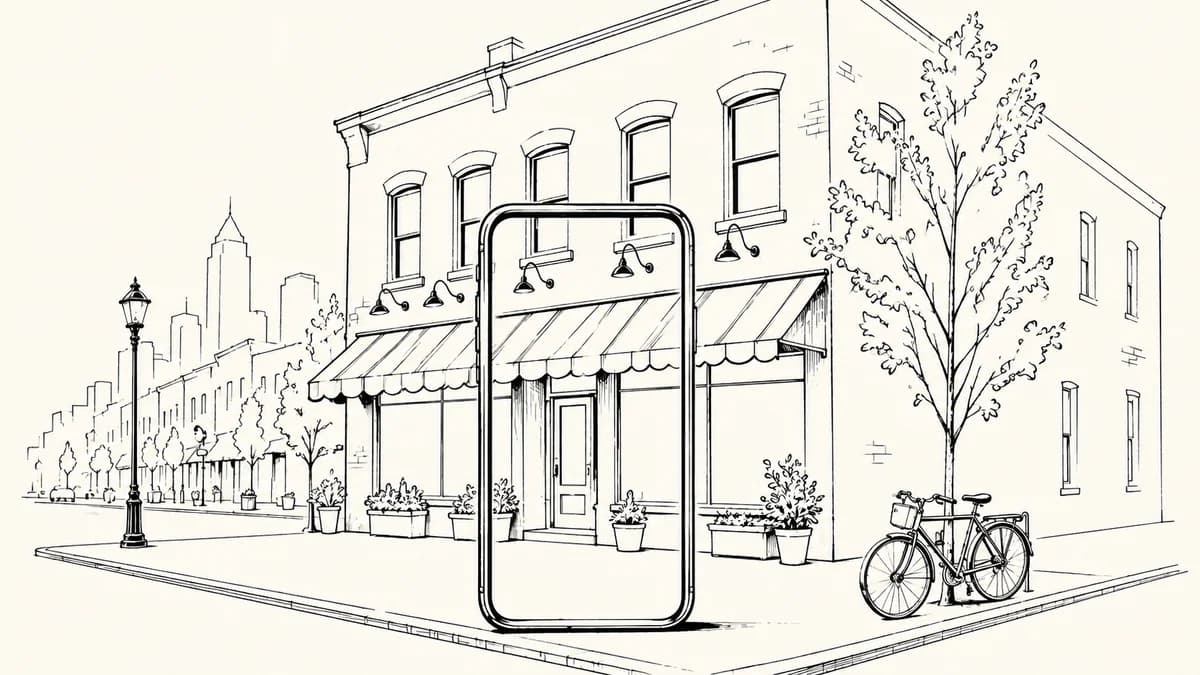
The fix is to give that attention somewhere to land that you own.Social is the storefront window on a busy street. The website is the shop with your name on the lease — where people walk in, where you capture them, where you close. You want both. Right now you're running a window with no shop behind it.
Four pieces. Then you own your ground.
A domain you own
yourname.com — the one address no algorithm can suspend, throttle, or change the rules on. The foundation everything else compounds on.
A fast site with the essentials
What you do, the proof, and one obvious way to contact or book. Loads in a second on a phone. Nothing fancy — just the things a ready-to-buy customer needs to say yes.
An audience you can actually reach
Email capture, so the relationship lives somewhere you control. When the platform changes, your list doesn't.
Search visibility that builds equity
A domain that ages, content that ranks, reviews that stack up — an asset that works at 3am and gets more valuable every year you own it.
We build the home.
You keep posting.
We stand up the site, wire your social into it, and turn the audience you've been renting into one you own — email capture, a clear path to book or buy, and the search visibility a decade-old business should have had years ago. You don't change how you post. You just finally have somewhere it pays off.
The honest take.
You can't get the last ten years of search equity back. That's the part that stings — and it's the part worth being honest about. But the bill stops running the day you plant a flag on ground you own.
The best time to build the site was when you opened. The second-best time is this quarter — before the next algorithm change decides how many of your own customers get to see you.